
Buyer guide
Pre-Shipment Inspection: A Simple Guide for B2B Buyers
On this page
- Share the right documents and approved requirements
- Set sampling rules and defect limits in advance
- Book PSI at 80–100% completion
- Product appearance, workmanship, dimensions, and function
- Quantity, retail packaging, and carton markings
- Loading readiness and transport protection
- What the inspection report should contain
- How to make the shipment decision
- Comparison table: ship vs rework vs hold
- Who should arrange the PSI?
- What happens if the factory fails PSI?
- How much does a PSI delay a shipment?
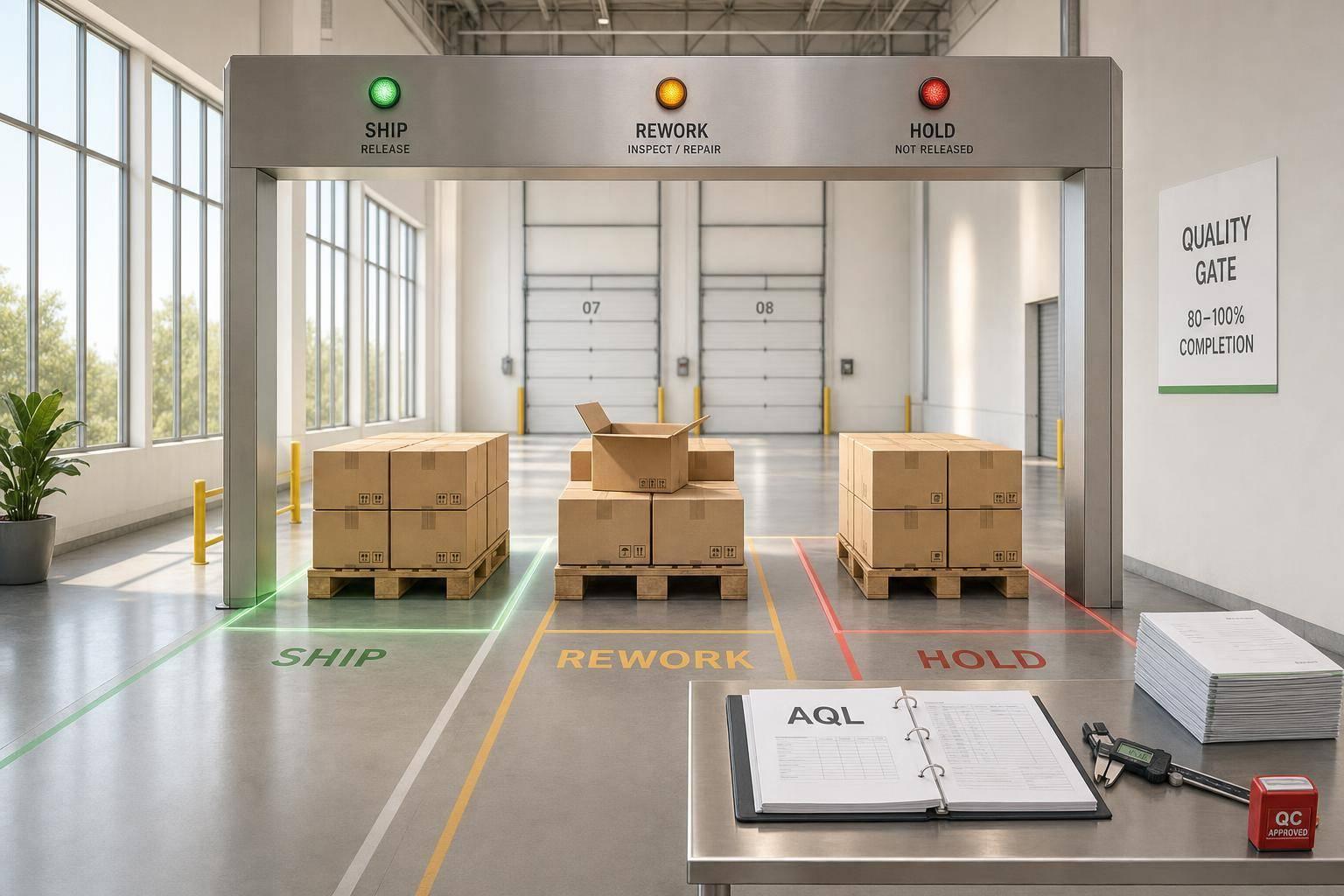
A pre-shipment inspection is your last factory check before goods leave. I use it to answer one simple question: should I ship, rework, or hold the order? For seasonal stock, that call can protect both delivery timing and margin, especially when even a small mistake can lead to returns, missed sales, or extra costs in the currency you sell in. This guide is for a Balkan or Eastern European buyer. Romania can be the destination, as one example, and the currency may then be RON. Serbia, Hungary and the Czech Republic are markets with reviewed buyer evidence on this site.
Here’s the article in plain terms:
- I treat PSI as a release gate, not paperwork.
- I send the inspector a full file pack: PO, specs, approved sample, artwork, labels, barcodes, and the EU requirements you have confirmed for your destination.
- I set AQL, sampling level, and defect limits before the visit.
- I book PSI when production is 80% to 100% complete.
- I want checks on product quality, quantity, packaging, labels, carton marks, and loading readiness.
- I use the report to decide:
- Ship if the batch meets the agreed standard
- Rework if problems can still be fixed
- Hold if there are safety, legal, function, or repeat major issues
A few points matter most:
- For EU-bound goods, labels, manuals, and markings must match the legal and buyer-approved standard.
- I check that manuals or instructions are present in the destination language once I have confirmed which language is required. Romanian is the example when Romania is the destination.
- For outdoor and seasonal goods like chairs, tables, gazebos, BBQ tools, and trampolines, even a delay of a few days can hurt the selling window.
- A failed PSI often costs less than shipping bad stock and dealing with returns, storage, or lost sales later.
| PSI stage | What I check | Why it matters |
|---|---|---|
| Before inspection | Documents, samples, AQL, defect limits | The inspector needs a clear standard |
| During inspection | Product, packaging, labels, quantity, cartons | This shows whether the batch matches the order |
| Before release | Report, photos, defect counts, test results | This supports the ship/rework/hold decision |
If I want PSI to work, I need to be clear before the factory visit. Clear requirements in, clear decision out.
A PSI only works if the inspector checks the goods against clear buyer instructions. Before the visit starts, send the approved PO, product specs, sample references, packaging artwork, and defect limits.
Share the right documents and approved requirements
Send the inspector one full document pack before the factory visit. That pack should include the signed purchase order with product codes and quantities, along with the sales contract terms.
Add the product specs in metric units, plus the main performance requirements, such as load capacity or weather resistance for outdoor goods. If the product has temperature claims or storage instructions, list them in °C.
You should also include:
- Print-ready artwork
- Carton mark templates
- Barcode specs, including type, placement, and scan quality
- Approved photos or samples
- The compliance items you have confirmed for the destination. Ask whether CE marking applies before anyone prints it. Include recycling symbols and manuals or instructions in the destination language when those are required
- Approved samples, photos, or drawings for colour, finish, and detail checks
When this file pack is ready, the inspector can check the factory output against the approved standard instead of making judgment calls.
Set sampling rules and defect limits in advance
Before the inspector arrives, agree in writing on your AQL (Acceptable Quality Limit), the inspection level, and the defect classes. Set the inspection level and AQL in writing, and use zero tolerance for critical defects. That means anything that could cause harm, break EU safety rules, or make the product illegal to sell.
Define each defect class in plain terms for the product type. For a camping chair, a critical defect could be a weld failure or a wrongly labelled load limit. A major defect could be a broken part or a clear colour difference from the approved sample. A minor defect might be a small paint mark or a light carton scuff.
Write these limits into the inspection brief so the final report can support a ship, rework, or hold decision.
Once the acceptance limits are fixed, the next piece is timing.
Book PSI at 80–100% completion
Book PSI when production is at least 80–100% complete and packing is well underway. If you book too early, the inspection may not reflect the final batch. If you book too late, you may miss the shipping cut-off if the inspector finds serious issues that need rework.
For seasonal orders into this region, timing gets tight fast. Think spring gardening tools, summer camping equipment, or garden furniture. In these cases, plan PSI a few days before the planned vessel loading date. That gives you some room for rework without missing the shipping window.
Once the documents and sampling rules are set, the inspector moves to four checks: product quality, quantity and packaging, labels, and loading readiness. The goal is simple: make sure the finished goods still match the approved order.
Product appearance, workmanship, dimensions, and function
The inspector checks the batch against your approved specs. For steel-frame products like folding chairs, that usually means checking weld quality, tube alignment, and paint finish. If a frame sits crooked or a weld looks poor, that's a quality issue and it can affect how the item works in daily use.
Dimensions are checked the same way. A folding table should match the approved metric size, such as 180 × 74 × 74 cm. If the measurements are off, or the legs don't sit level, the item no longer matches the approved specification. For fabric products like hammocks or camping cushions, the inspector looks at stitching, cutting accuracy, and whether reinforcement layers are in place. Chairs and tables with folding parts are also tested by hand. They should open and fold smoothly, without sticking or wobbling.
Colour consistency across the batch matters too. This is a big deal for outdoor furniture, where rope, frame, and cushion colours need to stay consistent from one production run to the next.
Quantity, retail packaging, and carton markings
The inspector counts cartons, checks inner quantities against the packing list, and confirms that the total matches the order. This matters even more for mixed-container orders, where different SKUs may be packed together.
Each retail box is checked for barcode placement, scan quality, and logo consistency. For goods going to an EU destination, the inspector also verifies that a CE mark is physically present only where you have confirmed it applies, and that manuals or assembly instructions are in the destination language.
Carton markings should include the details warehouse staff need for handling, including carton dimensions and volume.
Loading readiness and transport protection
Before the goods go into the container, the inspector checks whether the cartons are sealed, clean, and ready for loading. They also check whether the outer packaging can handle stacking pressure during transit. Strong export cartons that can withstand stacking and transport help reduce the risk of crushing before the goods reach their destination.
The inspector also checks pallet condition, moisture protection, and whether items that scratch easily have protective wrapping in place. Loading photos and a container loading report show how the goods were stacked inside the container. That gives the buyer clear proof of packing condition and load sequence at the point of dispatch. These findings then feed into the inspection report in Step 3.
PSI Decision Guide: Ship vs Rework vs Hold
Once product, packaging, and loading checks are done, the inspection report becomes the buyer’s release gate. It measures finished goods against the approved PO, sample, and defect limits, then turns what the factory found into a plain decision: ship, rework, or hold before anything leaves the supplier.
What the inspection report should contain
A good report needs to do more than list defects. At a minimum, it should include the inspection date and time, factory and order details, items checked, sampled quantity, sampling method and AQL, critical, major, and minor defect counts, measurements against specification, function test results, packaging and labelling findings, a ship, rework, or hold recommendation, and clear defect and packing photos.
The report should give you the facts you need to approve or stop release. And photos carry more weight than many buyers think. Strong reports include:
- Outer carton photos
- Product overview photos
- Close-up defect images
- Label and barcode images
- Quantity-counting evidence
- Loading or pallet condition, if relevant
Those images help you see whether an issue is a one-off or something repeated across the lot.
How to make the shipment decision
Start with the verdict. Then check quantity, AQL, photos, measurements, tests, packaging, labels, and the next action.
Ship when defect counts stay within the agreed AQL or acceptance standard, no critical issues remain, and packaging, labels, and quantity are all acceptable.
Request rework when the product still functions, but fixable problems could lead to returns or chargebacks. Common examples include labelling mistakes or missing warning text.
Hold when the report shows critical defects, failed function tests, safety or legal failures, wrong quantity, or repeated major defects across the sample. For seasonal home, garden, and outdoor orders, a hold is often the safer call than rushing out stock that misses the selling window anyway.
Use the table below to match the report result to the next step.
Comparison table: ship vs rework vs hold
| Decision | Typical trigger conditions | Likely timeline impact | Cost impact in your selling currency | Next action |
|---|---|---|---|---|
| Ship | Within the agreed acceptance standard; only minor cosmetic issues; packaging, labels, and quantity acceptable; no safety or compliance problems | Fastest release; protects seasonal launch timing | Lowest immediate cost | Approve shipment and release payment per contract |
| Rework | Fixable issues such as labelling errors, missing warning text, carton damage, packing mistakes, or isolated workmanship defects | Moderate delay for correction and re-inspection | Extra factory labour, re-inspection, and possible storage costs; often cheaper than handling returns | Require corrective action in writing; re-inspect before release |
| Hold | Critical defects, failed safety or compliance checks, failed function tests, incorrect quantity, or repeated major defects | Highest delay; shipment stopped until resolved | Highest short-term risk; may add demurrage, storage, and missed-sales costs | Stop shipment and payment release; demand root-cause evidence from the supplier |
Release decisions should rest on the agreed standard, not on one defect photo. A low-cost promotional garden item may allow more cosmetic variation than a premium retail product. But if the report shows safety, legal, or function failures, don’t release the shipment, no matter how tight the delivery deadline is.
If the report fails, send the supplier a written corrective action request and keep final payment on hold until re-inspection confirms the fix.
With the report in hand, the release decision gets much simpler. PSI is a release gate, not a box-ticking exercise. It helps catch defects that can still be fixed before the goods ship.
That said, PSI only works when the buyer’s requirements are clear from the start. If those requirements are vague, the inspection report won’t help much. Clear buyer requirements make the inspection usable.
Use the report to decide whether to ship, rework, or hold the order. That’s what turns PSI into a release gate instead of just another inspection step.
For seasonal home, garden, outdoor, and camping orders, PSI should be a standard part of every shipment. In practice, that means treating PSI as a standard release gate for seasonal orders. Used early and judged against clear criteria, PSI helps protect time and margin.
Who should arrange the PSI?
The B2B buyer handles the pre-shipment inspection.
Ask NINGBO YUFEI, or the inspector you appoint, who checks the product, who verifies the packing, and what loading updates you will receive before the goods leave the factory. That scope is confirmed for the order.
What happens if the factory fails PSI?
If a pre-shipment inspection shows the factory hasn’t met your quality or compliance standards, the inspection report becomes the basis for your next move.
You can choose to rework the goods, hold the order for further review, or not ship the products in their current state. That gives you a clear way to cut risk and avoid taking delivery of substandard inventory.
How much does a PSI delay a shipment?
The exact delay isn’t stated in the provided documentation.
That said, a pre-shipment inspection is meant to help you avoid bigger delays and added costs later. It does this by spotting defects, packaging mistakes, or labelling issues before the goods leave the factory.
If you build it into your schedule from the start, it can lower the risk of rework, returns, or unhappy customers after shipment.