
Buyer guide
Retail-Ready Packaging: Why It Matters for Online Sellers
On this page
- Damage, returns, and a poor unboxing experience
- Slow inbound receiving and extra warehouse labour
- Marketplace and EU compliance gaps
- Branded mailer boxes , insert cards, and easy-open retail packs
- Barcodes, carton markings, and label placement
- Protective inserts, multilingual manuals, and ship-in-own-container packs
- Lower damage rates, fewer returns, and lower repacking labour
- Faster receiving, cleaner stock booking, and lower courier handling friction
- Comparison table: non-retail-ready vs retail-ready packaging
- How do I know if my packaging is retail-ready?
- When should I use SIOC packaging?
- What packaging mistakes cause the most delays?
Bad packaging costs money fast. If I sell imported seasonal goods online in a Balkan or Eastern European market, weak cartons, missing barcodes, and manuals in the wrong language can lead to returns, warehouse labour, and delayed stock. Serbia, Hungary and the Czech Republic are markets with reviewed buyer evidence on this site. Romania can be the destination, as one example.
Here’s the short version:
- Retail-ready packaging means the product is ready to move from factory to warehouse to customer with no extra relabelling or repacking.
- It helps cut damage, returns, and inbound handling time.
- For heavier items, 5-layer corrugated board at 600–800 g/m² is often used to reduce crush damage.
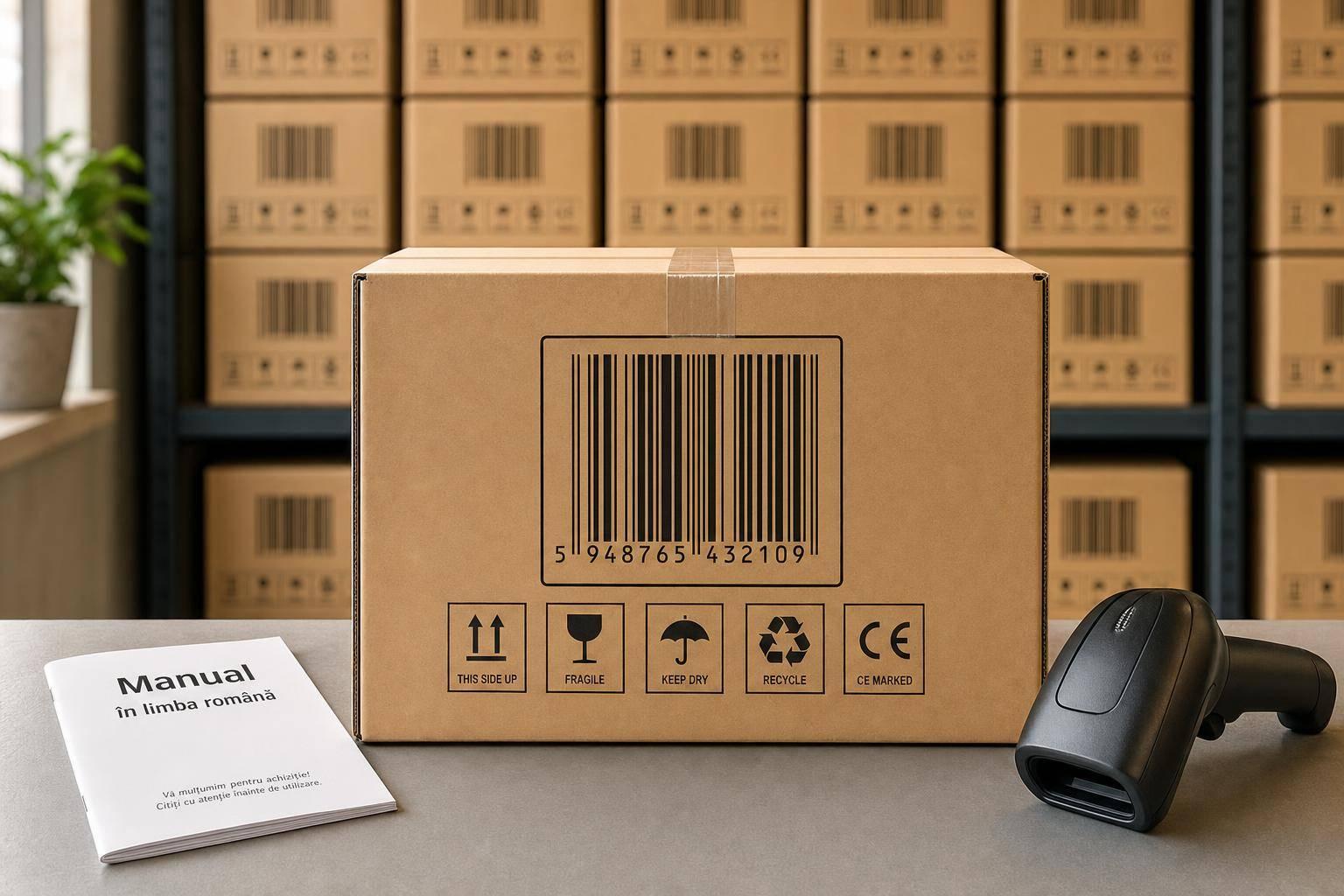
- Clear unit and carton barcodes, carton marks, and label placement help warehouse teams receive stock without opening boxes.
- Manuals and safety info in the destination language should be packed in from the start, once that language is confirmed, to avoid delays and manual leaflet insertion.
- For some products, ship-in-own-container (SIOC) can reduce extra outer-box use and handling.
If I had to boil it down to four checks before production, they would be:
- Protect the product
- Mark cartons clearly
- Add the right labels and manuals
- Match the pack format to the sales channel
A small packaging mistake can turn into extra cost in the currency you sell in through replacement shipments, return processing, and warehouse work. If Romania is the destination, that currency may be RON. For seasonal stock, that can also mean missing a short sales window.
| Area | If it’s wrong | If it’s right |
|---|---|---|
| Protection | More transit damage | Fewer damaged units |
| Barcode & carton data | Slow receiving | Faster stock booking |
| Manuals & warnings | Compliance delays | Stock ready for sale |
| Pack format | Repacking or extra handling | Smoother warehouse flow |
So when I look at retail-ready packaging, I’m not just looking at the box. I’m looking at cost control, stock speed, and customer experience in one go.
Once packaging leaves the factory, weak protection can turn retail-ready stock into damaged goods, delays, and extra work.
Damage, returns, and a poor unboxing experience
For seasonal products like camping chairs, BBQ tools, hammocks, and garden accessories, the trip from a Chinese factory to a customer's door in this region is hard on packaging. Boxes get stacked, pushed around, and dropped. If the carton isn’t made for that kind of trip, the product takes the hit. And every damaged item adds cost through returns, repacking, or lost selling time.
With heavier seasonal items, 5-layer corrugated cardboard at 600–800 g/m² is often needed to stop crushed corners and damaged frames. Without that level of protection, powder-coated finishes can get scratched, and loose parts can move during transit.
There’s also the issue of presentation. Unbranded packaging can make a product feel cheaper before the customer even opens the box. Blank outer panels only make that worse.
For e-commerce, packaging doesn’t just protect the item. It shapes the customer’s first impression too.
Slow inbound receiving and extra warehouse labour
When a shipment reaches a fulfilment centre without clear carton markings, the whole receiving process slows down. Warehouse teams may need to open boxes, check SKUs by hand, and sometimes repack items before they can book them into stock.
Missing SKU labels, carton marks, weight details, or dimensions force manual checks, slow receiving, and add relabelling work. Poor carton sizing causes problems too. Bad dimensions can waste pallet space, push up storage costs, and even trigger courier surcharges for non-standard parcels.
In plain terms, weak packaging design doesn’t stop at transit damage. It can also create extra labour the moment goods enter the warehouse.
Marketplace and EU compliance gaps
Compliance issues can block a product from being sold at all. If EAN or UPC barcodes are missing, the product can’t be scanned into a marketplace system.
For EU sales, missing safety warnings, assembly instructions, or required EU markings can hold up customs clearance or marketplace approval.
Language is another problem that catches importers off guard. Confirm the language of manuals and safety instructions for the destination before production. For an EU consumer product, that language is the one consumers in the member state can use. Romanian is the example when Romania is the destination. If a shipment arrives with the wrong language, staff at the fulfilment centre may need to insert printed leaflets by hand. That slows inbound processing and leaves a compliance question for that member state.
The answer is simple: packaging should be built from the start for protection, scanning, and local compliance.
The fix starts before production. Build retail requirements into the packaging spec from day one, so the product is ready for shelf presentation, barcode scanning, and courier handling without last-minute patchwork.
Branded mailer boxes, insert cards, and easy-open retail packs
A branded mailer box gives the product a cleaner first impression. Use the outer panels to show product visuals and key features, like UV protection or tilt functions.
Insert cards are a simple way to include setup, care, and warranty details.
It also helps to repeat the same core information on all visible sides. That makes cartons easier to identify at a glance and can cut down on warehouse checks and relabelling.
Next comes the part warehouses care about most: data they can scan and read fast.
Barcodes, carton markings, and label placement
Every carton should include enough information for warehouse teams to process it without opening the box. Standardised carton data supports faster inbound processing and fewer warehouse handling errors.
In practice, that means using both unit and carton barcodes to speed up scanning. SKU, quantity, size, and handling details should appear on more than one face, so the data stays visible even when cartons are stacked.
Once the carton is easy to receive and scan, the next job is keeping the product safe on the move.
Protective inserts, multilingual manuals, and ship-in-own-container packs
For heavier seasonal items, use stronger corrugated board to give the product the strength it needs during local delivery. Inserts plus a strong carton help protect both the item and the retail box during courier transit.
Instruction manuals for an EU destination need the language that destination requires. Confirm it, then print it, so assembly errors and returns are less likely. One language file does not cover every market in the region.
Ship-in-own-container packaging can also work well for compact, durable products. But it’s not for everything. Use it only when the retail box can handle courier delivery on its own. If the item is bulkier or more fragile, a separate outer carton is still the safer option.
Non-Retail-Ready vs Retail-Ready Packaging: Key Differences
Lower damage rates, fewer returns, and lower repacking labour
Packaging decisions hit the business in plain, measurable ways: damage rates, labour time, and how customers see the product. For imported seasonal goods, packaging quality matters at every handoff. Better packaging cuts damage, claims, and repacking costs. Heavier seasonal items need stronger board, and 5-layer corrugated helps reduce crush damage and claims.
When fewer deliveries arrive damaged, sellers send fewer replacements and spend less time dealing with claims. If your seasonal margins are tight, even a small drop in return rates can make a clear difference to profit. Retail-ready packaging also trims manual relabelling and repacking. Goods arrive with pre-applied carton marks, barcodes, and local-language manuals, so warehouse teams have less fix-up work to do.
Faster receiving, cleaner stock booking, and lower courier handling friction
Cartons with scan-ready barcodes, clear carton data, and standard dimensions are simply easier to process. Receiving moves faster, with fewer mistakes. Teams can book stock with less manual handling, which helps products become sellable sooner.
For mixed shipments, consistent carton sizing also keeps container loading and warehouse handling more orderly. That makes receiving and storage easier to manage from one shipment to the next.
Comparison table: non-retail-ready vs retail-ready packaging
The difference is easiest to see side by side.
| Feature | Non-Retail-Ready Packaging | Retail-Ready Packaging |
|---|---|---|
| Inbound handling time | High; manual sorting required | Low; scan-ready labels and carton marks |
| Damage risk | High; standard board offers limited protection | Low; 5-layer corrugated (600–800 g/m²) |
| Return rate | Higher; transit damage or missing manuals | Lower; stronger packaging and local-language manuals |
| Relabelling work | Manual relabelling and leaflet insertion | Minimal; labels and manuals pre-applied at factory |
| Shelf and unboxing presentation | Generic appearance; blank or incorrect panels | Branded design across all carton faces |
| Freight and handling cost | Higher; extra handling and repacking | Lower; standardised dimensions and SIOC readiness |
Retail-ready packaging is more than a box. It’s a full system built around protection, identification, compliance, and channel fit. In plain terms, you need to lock down four things before goods leave China: protect the product, mark cartons clearly, include the right labels and manuals, and pack the item in a format that fits the sales channel.
Product protection comes first. That can mean foam inserts, reinforced corners, moisture-resistant wraps, and ship-in-own-container designs, where the retail box is strong enough to make it through delivery without falling apart.
Out of these four areas, compliance is the check that can stop a listing first when something is off. Confirm the manual language, and confirm whether a CE mark applies. Use the mark only when the technical file supports it. Recycling symbols and safety warnings should be clear and easy to read before shipment, in the form your destination asks for.
For seasonal home, garden, outdoor, and camping products, timing is everything. Selling windows are short, and mistakes can hit your costs in the currency you sell in while also leaving you short of goods right when demand spikes. Check your next shipment against these four points before production starts.
How do I know if my packaging is retail-ready?
Your packaging is retail-ready when it makes handling easy and gives customers a polished experience. That starts with the basics: make sure carton marks and labels are applied the right way so inbound processing goes smoothly, and add local-language manuals where needed.
It should also be set up for shipping, not just shelf appeal. For example, ship-in-own-container packaging can protect the product in transit while helping cut damage and returns. Good design support helps you meet both brand needs and day-to-day packaging demands.
When should I use SIOC packaging?
Use Ship-in-Own-Container (SIOC) packaging when you want to improve logistics efficiency, cut material waste, and reduce warehouse handling problems.
This works especially well for online sellers of seasonal home, garden, and outdoor products, like folding furniture. Compact, durable, ready-to-ship packaging can lower freight costs and help products reach customers without the need for extra shipping boxes.
What packaging mistakes cause the most delays?
The biggest delays usually come from unclear carton marks and missing or inaccurate labels. If carton data isn't clear, inbound processing slows down. That can then lead to warehouse handling issues.
Another common problem is missing local-language instruction manuals. This can hurt retail compliance and leave customers frustrated.
The fix is simple: standardise packaging and carton markings before shipment. That helps cut bottlenecks and avoids manual relabelling.